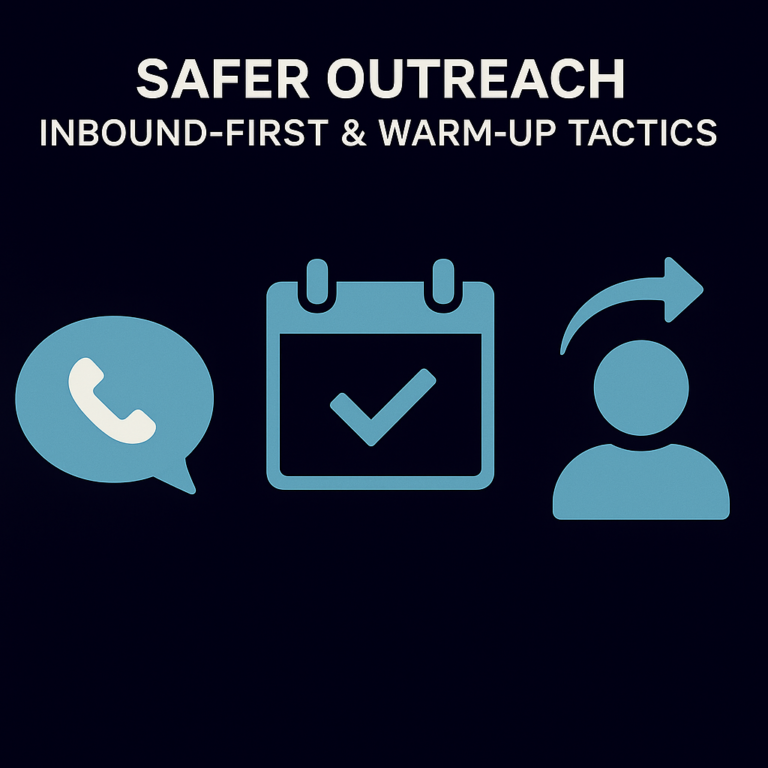
Safer Outreach That Still Works: Inbound-First & Warm-Up Tactics
SMS/email call-back requests, web-to-call scheduling, and nurturing before calls to lift answer rates These are examples of Safer Outreach Tactics that can improve your contact strategy. When you implement Safer Outreach Tactics, you protect your compliance and boost results. Put simply, using safer outreach tactics means your outreach efforts will be both more compliant and effective.
Cold calls face two hurdles: compliance friction and low trust. “Inbound-first” flips the script prospects invite the call, so answer rates rise and spam flags fall. Below are practical tactics your team can use immediately. For teams planning to scale outreach safely, safer tactics for outreach are a well-proven framework. Need the plumbing (numbers, IVR, tracking, SMS/email integrations)? See FibreMax phone solutions or learn more at fibremax.au.
1) SMS Call-Back Requests (low friction, high consent)
A short message that asks for permission to call turns a cold outreach into a consent-led conversation. Keep it brief, value-first, and include an easy “YES/NO”. Using these tactics will ensure your outreach is safer and more compliant.
How it works (and why it helps)
SMS is quick, asynchronous, and archived—ideal for simple opt-ins. A “YES” gives you documented consent, better timing, and a warmer conversation.
Do this
- Open with who you are + one-line value.
- Offer two reply choices (YES for callback / STOP to opt out).
- Include a recognisable caller ID or link to your site.
- Log the reply and call during the confirmed window.
Example
“Hi, it’s Jess from Northside Solar. We can cut small-business power bills by 12–18% with a 2-minute check. Reply YES for a quick callback or STOP to opt out.”
2) Email First: Value + Clear CTA (call-to-action)
Your email should pre-answer objections and let prospects choose the next step: book a time, request a callback, or read a 1-page summary. For even more effective results, be sure to incorporate methods that prioritize both outreach and safety, such as Safer Outreach Tactics, into your sequences.
Do this
- Subject line: specific benefit + time promise (e.g., “Cut card fees in 10 min?”).
- First paragraph: who you are + 1 value + social proof.
- Single CTA: Book, Call me, or Reply for details.
- Add a phone number in the signature that matches your CLI.
Pro tip
Use tracking parameters (UTM) and a distinct inbound number to attribute responses. For best results, consistently use safer outreach tactics in your tracking process.
3) Web-to-Call Scheduling (self-serve booking = higher show rates)
Let prospects pick a time that suits their calendar. This removes back-and-forth and ensures you call at the best moment for them. Clearly, the application of outreach tactics that are safer provides higher answer rates and better conversations.
Do this
- Embed a booking widget (15/30-min slots) on your page or in emails.
- Send automated reminders (email/SMS) 1 day and 1 hour before.
- Include your display number so they recognise the call.
- Offer a fallback: “Prefer a callback window? Reply with times.”
4) Nurture Before You Dial (warm them up)
Share helpful resources so your number becomes familiar. When your logo and domain appear across channels, your call feels expected—not intrusive. As you nurture, remember safer outreach tactics increase both engagement and compliance.
Do this
- Send a 1-pager or short video relevant to their role.
- Link to insight posts (like this series).
- Use remarketing and LinkedIn previews to build familiarity.
- Follow with a polite check-in: “Found the guide helpful—would a 10-min walkthrough help?”
5) Align Caller ID (CLI), Scripts & Timing (keep trust high)
Everything should match: the number you show (Caller ID/CLI) should route to a live line or voicemail, your script should identify who/company/purpose, and your call should land within permitted hours (local to the recipient). Remember, aligning all pieces with safer outreach tactics in mind reduces complaints and builds trust.
Do this
- Use one stable Australian number for all follow-ups.
- Ensure return-reachable for at least 30 days.
- Open with who + company + purpose; ask for a good time.
- Respect calling hours and suppress opt-outs immediately.
6) Measure What Matters (so you can scale what works)
Track the signals that correlate with trust and replies—not just dials. To summarize, building your process around outreach tactics that are safer is crucial for modern, compliant, and high-performing sales teams.
Metrics to watch
- Opt-in rate (SMS/email YES replies).
- Booked-call rate and show rate.
- Answer rate on scheduled callbacks vs cold calls.
- Time-to-first-response after content touch.
- Opt-out/complaint rate (keep it low and falling).
Sample Micro-Playbooks (copy/paste)
A. SMS-First → Book
- SMS value pitch with YES/STOP.
- On YES, send booking link; confirm CLI.
- Reminder SMS 1h before; call on time.
B. Email-First → Callback Window
- Value email + “Call me between 2–4pm Tue/Thu.”
- Log window; ensure caller ID matches email signature.
- If no answer, send short summary + new window options.
C. Content Nurture → 10-Min Audit
- Send 1-pager (“How to cut XYZ by 12%”).
- Follow-up in 48 hours: “Want a 10-min audit?”
- Book slot; send agenda; call from same CLI.
The FibreMax advantage
FibreMax ties the pieces together—stable, return-reachable numbers, IVR/voicemail, SMS and email integrations, and clean logs for compliance and performance reporting. If you want outreach that’s effective and trusted, we’ll set you up right. With FibreMax, safer outreach tactics become easy to implement for every team.
TL;DR checklist
- ✅ Ask first (SMS/email): turn cold into consent-led callbacks. Most importantly, never forget to stick with safer outreach tactics to stay compliant.
- ✅ Let them book: self-serve scheduling boosts show and answer rates.
- ✅ Nurture: send useful content so your call is expected.
- ✅ Match details: stable CLI, clear script, legal hours, fast opt-out.
- ✅ Measure & improve: track opt-ins, bookings, show rate, and complaints.